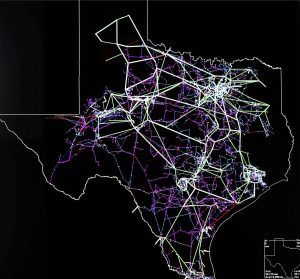
The November 11, 2025, meeting of ERCOT’s Regional Planning Group (RPG) convened to advance several critical Electric-Infrastructure Review (EIR) updates, review the 2025 RTP progress, and discuss economic-analysis results tied to transmission planning paths.
Against a backdrop of rapidly evolving load drivers — from industrial and large-load projects to emerging “green-ammonia” and heavy-industry demands — this meeting underscored how the ERCOT planning framework is adapting to a shifting long-term load and resource landscape. Below is a detailed breakdown of the major agenda items, technical context, stakeholder implications, cost allocation considerations, and next-steps.
EIR Updates: Project-Level Focus
At the start of the meeting, ERCOT staff walked stakeholders through EIR updates on several major EIR-driven transmission/load-interconnection proposals:
- Connell 345/138-kV Switch and Connell–Rockhound 345-kV Double-Circuit Line: An active high-voltage project expected to enhance reliability and transfer capability in a zone seeing growing load and potential constraints.
- Ammonia Plant Load Project and Nueces Green Ammonia Load Interconnection Project: Representing industrial-scale load additions tied to ammonia production or “green” ammonia ambitions, both flagged for EIR status review due to their potential to materially shift load patterns, stress local transmission assets, and require network upgrades.
These EIR updates matter by bringing industrial-scale loads and potentially high-demand facilities into ERCOT’s planning lens, these projects trigger evaluation under the RPG Project Review process, rather than being treated as minor or localized upgrades. EIR Updates elevate the level of scrutiny, modeling requirements, and stakeholder input, including for transmission service providers (TSPs), developers, and other market participants.
2025 RTP Updates & Economic Analysis: Transmission Plan Implications
Midway through the meeting, ERCOT presented the latest version of the 2025 Regional Transmission Plan (RTP) along with economic-analysis refinements.
- The RTP update reflected both reliability-driven and economic-driven transmission needs across the ERCOT footprint — aligning with the framework described in the ERCOT Planning Guide, under which the RTP is developed in coordination with the RPG and TSPs, and submitted annually.
- The economic analysis presentation included production-cost modeling, load-growth forecasts (including heavy industry and large-load interconnections), and sensitivity scenarios that account for both base forecast and “high-demand/high-penetration” trajectories. These analyses inform which transmission upgrades should be prioritized, and how resources and loads might shift system flows — especially under stressed or contingency conditions.
The 2025 RTP update reinforced the growing likelihood that ERCOT will need to continue advancing major transmission backbone upgrades (including those at high voltage levels) to meet both reliability and economic needs. The inclusion of large industrial/ammonia-load projects contributes to that pressure by increasing both concentrated and distributed demand.
How the RPG Framework Supports Oversight & Stakeholder Input
As a reminder — the Regional Planning Group serves as the primary forum for review, comment, and stakeholder input on transmission projects in ERCOT, ensuring reliability and efficiency of system planning.
Under Protocol Section 3.11.4 and the Planning Guide’s “Regional Planning Group Project Review Process,” any major transmission project (except small-scale localized upgrades or certain generation interconnection–only projects) must undergo formal RPG review before being considered endorsed for inclusion in the RTP.
That process requires:
- Full project submission including topology, electrical parameters, load/ generation assumptions, alternative options, and cost estimates.
- ERCOT’s independent analysis, stakeholder comment period, and a transparent comparison of alternatives (cost, reliability, long-term viability).
Thus, updates like the ammonia-load EIRs and high-voltage transmission proposals must clear rigorous stakeholder scrutiny — and that’s exactly what the November 11 meeting advanced.
Financial & Cost-Allocation Considerations
With major infrastructure proposals on the table, including high-voltage upgrades and load-driven transmission improvements, cost allocation and financial responsibility become central topics. Key considerations from the meeting and ERCOT’s process:
- Reliability-driven vs. economic-driven classification: Under ERCOT’s Planning Guide, projects are evaluated for whether they solve a reliability deficit (e.g., overloaded lines, contingency risks) or improve economic efficiency (e.g., reduce losses, relieve congestion). That classification affects cost allocation mechanics.
- Load-interconnection impact: For large-load projects — especially those like ammonia plants — TSPs and developers may face significant upgrade costs, depending on the project’s size and system impact. The EIR process ensures those costs and necessary upgrades are visible early in the planning timeline.
- Transparency & stakeholder input: Because of the RPG’s requirement for full project disclosure (topology, alternatives, cost estimates, impact analyses), market participants have visibility into cost drivers — enabling better-informed siting, financing, and development decisions.
In short: the November 11 session reinforced that large-load interconnections and backbone transmission upgrades will likely carry material cost recovery implications for all participants, and early awareness is critical.
What This Means for Developers, Large Loads & Renewable/Industrial Projects
For developers, industrial players, or large-load customers (e.g., data centers, manufacturing, industrial-scale plants, green-ammonia facilities), the November RPG meeting carries several important implications:
- Early clarity on grid impact and upgrade requirements: Projects like the ammonia plant connections, now under EIR review, will need full transmission-upgrade assessments, potentially including high-voltage backbone or substation upgrades, which affects project timelines and capital planning.
- Risk of cost responsibility or participation in upgrades: Depending on the classification of transmission upgrades (reliability vs economic), project sponsors may bear part or all of the cost of required upgrades or be subject to cost-sharing rules.
- Need for accurate load forecasting & modeling: Given ERCOT’s increasing reliance on heavy-industry and large-load forecasts, project proponents must submit detailed load profiles (timing, phased build-out, growth assumptions) to ensure the planning models reflect real-world risk.
- Earlier stakeholder engagement: Given the transparency and comment process under RPG, developers and stakeholders must engage early, review the transmission plans, and potentially influence routing or alternative assessments.
For renewable developers co-located with industrial loads, or hybrid plants, this environment underscores how load and generation planning are increasingly interdependent; requiring coordinated strategy for both interconnection and, if needed, transmission upgrades.
Key Upcoming Milestones & What to Watch
- RTP Finalization (Year-End 2025): The 2025 RTP, including projects included after RPG review, is expected to be finalized by December 31, per the Planning Guide calendar.
- Next RPG Meeting – December 2025: The following RPG meeting (scheduled Dec 16) will likely include follow-up updates for projects that advanced during the November meeting, potentially including updated scopes, alternative assessments, and cost estimates.
- EIR-driven Project Submissions & Comment Window: New or revised transmission proposals (post-November) will be posted for stakeholder comment. All TSPs, developers, and market participants with interest should monitor ERCOT’s MIS and subscribe to RPG communications to stay informed.
- Integration with Planning Working Group (PLWG) & LLWG Activities: As transmission planning increasingly intersects with load-growth (LLWG) and interconnection trends, projects approved under RPG review will likely feed into broader load and resource planning processes. Access our comprehensive summaries from this month’s LLWG meeting here and this month’s PLWG meeting here.
ERCOT Interconnection Support
ZEG helps project developers, large-load customers, and utilities interpret ERCOT RPG decisions — converting EIR updates and RTP updates into actionable grid-integration roadmaps. Whether you’re siting a new industrial load, evaluating renewable + load co-location, or managing upgrade risk under heavy demand growth, our team provides modeling, cost-allocation analysis, timing guidance, and interconnection strategy support. Contact us to map November RPG outcomes into a concrete transmission-strategy plan tailored for your portfolio.
Resources & Reference Documents
ERCOT “What is Transmission Planning Process?” overview (August 2025)
ERCOT RPG — November 11, 2025 Meeting Details & Agenda
ERCOT Planning Guide — Regional Planning & Project Review Process