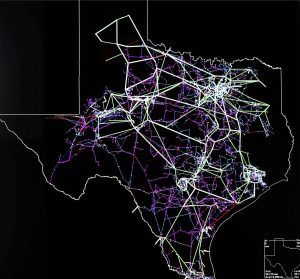
SPP convened its LFTF conference on September 30, 2025, bringing together stakeholders to discuss the future of SPP’s Long Term Transmission Planning Framework, regional coordination and interregional planning, and renewable integration across the SPP footprint. The meeting focused on long-range planning initiatives, transmission expansion priorities, and the alignment of policy-driven and reliability-driven grid projects.
As renewable development accelerates and large-load growth reshapes system demand, SPP’s long-term transmission planning framework is entering a critical stage. The September LFTF meeting underscored that the region’s next decade of transmission investment must be both flexible and forward-looking — designed to support reliability, decarbonization, and economic growth across a rapidly evolving energy landscape. Below is a summary of the SPP LFTF meeting’s key discussions.
SPP’s Long Term Transmission Planning Framework (LTP)
The LFTF session opened with an overview of SPP’s long term transmission planning framework (LTP), a cornerstone of its Integrated Transmission Planning (ITP) process. The LTP framework is designed to look 20 years ahead, identifying system reinforcements needed to meet expected load growth, generation shifts, and state policy objectives.
Key discussion points included:
- Planning Horizon Expansion: SPP is extending its analytical horizon to 2045, allowing for better forecasting of renewable resource siting, electrification impacts, and load diversity across regions.
- Policy and Reliability Integration: The next planning cycle aims to align long-term reliability needs with state-level clean energy goals, ensuring that grid buildouts enable—not hinder—policy-driven generation transitions.
- Future Transmission Corridors: Early modeling indicates that new high-voltage corridors will be required to support renewable-rich zones in the western and southern SPP territories, where solar and wind growth is accelerating.
- System Flexibility: Planners are emphasizing transmission flexibility, designing projects capable of adapting to future uncertainty in technology, market structure, and load distribution.
This expanded planning scope positions SPP as one of the leading regional operators integrating long-term policy foresight into technical planning decisions.
Renewable Integration and Resource Siting Trends
A major theme of the conference centered on renewable integration and generation siting trends. With solar, wind, and storage capacity projected to exceed 100 GW in the SPP interconnection queue by 2030, planners are refining how they identify optimal transmission solutions to deliver that power reliably to demand centers.
Highlights include:
- Renewable Energy Zones (REZs): SPP’s next planning cycle will incorporate new Renewable Energy Zone modeling, identifying high-potential areas for resource development based on grid topology, land availability, and curtailment risk.
- Hybrid Resource Coordination: The rise of hybrid projects combining solar and storage was discussed as a critical trend. SPP plans to include hybrid dispatch models in its transmission simulations to ensure accurate representation of flexibility and ramping benefits.
- Curtailment Mitigation: Transmission upgrades and interregional ties are expected to play a key role in reducing renewable curtailment, particularly during off-peak and high-production periods.
- Load Growth from Electrification: Increasing load from data centers, hydrogen production, and electric vehicle adoption will further shift the geographic balance of demand, requiring new long-distance transmission corridors.
By integrating renewable and load-growth forecasts into one unified framework, SPP aims to prevent the bottlenecks and curtailment issues that have challenged developers in recent years.
Interregional Planning and Coordination across the SPP Footprint
The LFTF conference also covered interregional transmission coordination, particularly between SPP and neighboring Regional Transmission Organizations (RTOs) such as MISO and ERCOT. With energy markets and transmission systems becoming increasingly interdependent, cross-regional coordination is now a key part of SPP’s long-term vision.
Key updates included:
- Seam Studies and Transfer Capability: SPP continues to evaluate how expanding interregional transfer capability can improve reliability, reduce congestion costs, and enhance renewable deliverability.
- Joint Planning Principles: Discussions reinforced the need for consistent methodologies and shared assumptions across RTOs to identify mutually beneficial transmission solutions.
- Policy Alignment: SPP and MISO are collaborating to align long-term planning assumptions under evolving FERC guidance, ensuring both regions can jointly support renewable and storage growth.
- Economic Benefits Analysis: Interregional projects are now being assessed for broader economic and resilience benefits, not solely congestion relief, highlighting a shift toward holistic planning.
These efforts reflect a new era of grid collaboration — one that views the transmission system as a shared national asset rather than isolated regional infrastructure.
Modeling Enhancements and Future Scenarios
The LFTF also highlighted significant improvements to system modeling tools and scenario analysis. Planners are enhancing their ability to test multiple futures under various load, generation, and policy assumptions.
- Scenario Diversity: SPP will study multiple futures, including high-renewable penetration, high-load growth, and extreme-weather reliability stress scenarios.
- Transmission Utilization Modeling: A new focus on utilization metrics will help prioritize projects that maximize capacity under diverse system conditions.
- Storage and Grid-Forming Technologies: Future scenarios will incorporate advanced grid technologies such as grid-forming inverters, synchronous condensers, and utility-scale storage to improve system stability.
- Economic and Resilience Metrics: Each scenario will evaluate not just production cost savings but also resilience, outage recovery capability, and avoided load loss.
This forward-looking analytical approach ensures that new transmission infrastructure remains valuable even as the grid evolves technologically and economically.
Key Takeaways from the SPP LFTF Meeting
he September 2025 SPP LFTF conference emphasized several major takeaways for renewable developers, utilities, and grid planners:
- Transmission must lead the transition. SPP’s long-term strategy places grid expansion at the forefront of renewable and reliability planning.
- Interregional collaboration is essential. Seam coordination and shared planning assumptions will drive more efficient investment across the central U.S. grid.
- Modeling accuracy determines success. Enhanced scenario modeling and renewable zoning will guide smarter, data-driven transmission decisions.
- Policy and reliability goals are converging. Transmission plans will increasingly balance clean energy mandates with operational security.
For developers and asset owners, aligning project strategies with SPP’s long-term priorities will be key to securing interconnection and deliverability in the years ahead.
At ZEG, we help renewable developers, investors, and utilities navigate SPP’s evolving long term transmission planning framework. From resource siting and congestion analysis to deliverability studies and transmission readiness, our team ensures your projects are built on a foundation of technical precision and market awareness.
Whether you’re developing renewable assets in the SPP footprint or evaluating opportunities near seams with MISO or ERCOT, ZEG provides the expertise to position your projects strategically within upcoming transmission buildouts. Contact ZEG today to align your portfolio with SPP’s next generation of long-term transmission planning — and build renewable projects ready to thrive in tomorrow’s grid.
For more on SPP’s Long Term Transmission Planning Framework, Interregional Planning, and the SPP Footprint, view meeting materials here.