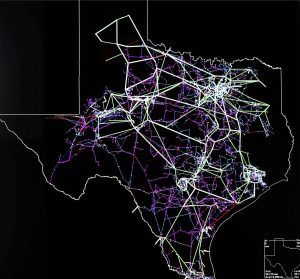
Texas continues to experience unprecedented growth in large electrical loads, driven by data centers, industrial electrification, hydrogen production, and other power-intensive facilities. As interconnection requests have scaled, so too have concerns around system reliability, study integrity, and whether existing processes are sufficient to manage the pace and complexity of demand.
In response, the Public Utility Commission of Texas (PUCT) opened Project 58481, a rulemaking docket focused on strengthening how large load interconnections are evaluated, studied, and integrated into the ERCOT system. While the docket is still evolving, its direction is already clear: greater scrutiny, stronger technical expectations, and reduced tolerance for speculative or under-prepared requests.
For developers, Project 58481 is not just a regulatory update, it represents a structural shift in how risk must be managed when pursuing load interconnection in ERCOT.
What Is Project 58481
Project 58481 is a formal proceeding evaluating whether changes are needed to ERCOT’s interconnection framework for Large Flexible Loads (LFLs) and other high-impact load types.
The docket is examining issues such as:
- Whether existing screening and study processes adequately capture system reliability risk
- How quickly and under what conditions large loads should be allowed to interconnect
- What technical standards and modeling requirements should apply to electronically controlled or inverter-heavy loads
- How speculative load requests affect planning studies and market outcomes
At its core, the project 58481 reflects growing concern that large loads can materially affect system stability, particularly during abnormal grid conditions; an issue that traditional demand assumptions were never designed to address.
Why This Matters for Large Load Developers
Historically, ERCOT’s load interconnection process has been relatively permissive compared to generator interconnection. Load requests often advanced with limited upfront technical validation, with many risks addressed later, or not at all.
Project 58481 signals a shift away from that model.
Developers should expect:
- Higher expectations for technical readiness at submission
- Increased modeling and data requirements, especially for power-electronics-based loads
- More conservative study assumptions around load behavior during disturbances
- Greater coordination between ERCOT planning, interconnection, and operational studies
Projects that approach interconnection as an administrative step rather than a technical exercise may face delays, redesigns, or re-study risk under the evolving framework.
Key Areas of Focus Emerging from the Docket
While final rules are still under discussion, several themes have consistently surfaced throughout Project #58481.
1. Load Modeling and Dynamic Performance
A major driver of the docket is concern around how large electronic loads behave during voltage and frequency disturbances. Inverter-based equipment, UPS systems, and tightly controlled industrial processes can respond very differently than traditional load.
Future expectations may include:
- More detailed dynamic and stability models
- Clearer ride-through and tripping assumptions
- Validation that load controls do not exacerbate system events
Developers relying on generic or placeholder load models should expect those assumptions to be challenged.
2. Readiness and Speculative Queue Risk
Project 58481 is also addressing the issue of speculative load requests—projects that reserve capacity without firm commercial or technical foundations.
Potential outcomes include:
- Stronger site control and development milestone requirements
- Tighter timelines for progressing through studies
- Increased scrutiny of withdrawal behavior and queue churn
This mirrors trends seen in generator interconnection reform nationwide: optional capacity is becoming more expensive to hold.
3. Interaction with ERCOT Planning and Reliability Studies
Large loads do not exist in isolation. Their impacts propagate into:
- Regional Transmission Plan (RTP) assumptions
- Stability and contingency analyses
- Operational risk assessments
One focus of Project 58481 is improving alignment between interconnection studies and ERCOT’s broader planning models, reducing the risk of late-stage surprises.
For developers, this means that planning assumptions matter earlier and can influence both cost and schedule.
Why Early Technical Work Is Becoming Essential
Under an evolving ERCOT framework, waiting for ERCOT studies to reveal risk is increasingly dangerous.
Early-stage prospective analysis can help developers understand:
- Exposure to transmission upgrades or local reinforcements
- Sensitivity to system strength and short-circuit limitations
- Potential stability concerns tied to load control behavior
- How project sizing or phasing affects feasibility
Identifying these issues early preserves flexibility—before capital, land, and commercial commitments become fixed.
Timeline Uncertainty and the Cost of Waiting
Because Project 58481 is still underway, some developers are tempted to “wait and see.” In practice, that approach carries its own risk.
Even before final rules are adopted:
- ERCOT staff and stakeholders are already adjusting expectations
- Study rigor is increasing through workshops and interim guidance
- Developers are being asked more detailed technical questions earlier
Projects that are not prepared to respond quickly may find themselves losing time relative to better-positioned competitors.
How ZEG Helps Developers Navigate PUCT 58481
ZEG is a grid interconnection and transmission advisory firm that supports developers pursuing large load interconnections across ERCOT.
In the context of Project 58481, our work typically focuses on early risk clarity, not regulatory speculation.
Support often includes:
- Prospective and shadow studies aligned with ERCOT planning assumptions
- Stability-focused screening for inverter-heavy or fast-acting loads
- Review and refinement of load modeling inputs and assumptions
- Identification of upgrade, reliability, and operability risks
- Independent technical perspectives to support internal go / no-go decisions
We do not replace ERCOT studies, and we do not promise outcomes. Our role is to help developers understand system risk before it becomes a schedule or capital problem.
Final Thoughts
PUCT’s Project 58481 reflects a broader reality: large loads are now system-critical resources, not passive demand. As ERCOT adapts its framework, developers who invest early in technical understanding will be better positioned to move quickly—and defensibly—through the interconnection process.
Preparation, not optimism, will separate viable projects from stalled ones.
If you are evaluating a large load project in ERCOT and want a technically grounded perspective on emerging risk, ZEG is happy to serve as a sounding board. Contact us to discuss Project 58481, and how it could affect your project.
Additional Resources Related to PUCT’s Project 58481
The following public materials provide background and ongoing context for PUCT Project 58481 and ERCOT’s evolving approach to large load interconnection and reliability:
- Public Utility Commission of Texas – Project 58481
Rulemaking and filings related to large flexible load interconnection and reliability considerations, access here - ERCOT Planning Guide – Section 5 (Load Interconnection Requirements)
Technical and procedural requirements for load interconnections in ERCOT, access here