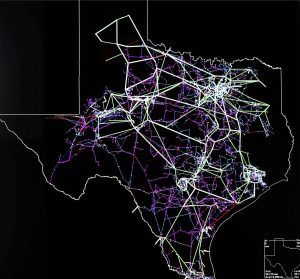
ERCOT’s Reform Era
Texas remains the fastest-growing U.S. power market, both in terms of demand and renewable energy development. With more than 40 GW of projects in the queue and unprecedented load growth from electrification and data centers, ERCOT is under pressure to streamline interconnection and strengthen grid reliability. Two reforms: Planning Guide Revision Request 115 (PGRR115) and Nodal Protocol Revision Request 1234 (NPRR1234), particularly stand out as pivotal.
For developers, these changes alter the economics, risks, and timelines of future projects. Understanding them is critical not just for compliance, but for competitive positioning in the ERCOT market.
What is PGRR115?
PGRR115 was introduced to address long-standing concerns about planning transparency, regional cost allocation, and project qualification. In short, it provides more structure around how ERCOT identifies and approves regional transmission projects.
Key elements include:
- Regional cost thresholds: Developers must account for new financial triggers when projects drive significant system upgrades.
- Improved transparency: ERCOT planning reports now outline more detail on regional project needs, timelines, and cost allocation.
- Stronger qualification requirements: Projects are evaluated with greater rigor against load forecasts, reliability criteria, and resource adequacy.
For developers, this means fewer surprises late in the process. However, it also means more upfront due diligence to ensure project assumptions align with ERCOT’s criteria.
What is NPRR1234?
NPRR1234 complements PGRR115 by revising operational requirements under ERCOT’s Nodal Protocols. The focus here is on interconnection study processes, reliability standards, and project milestones.
Highlights include:
- Qualified change definitions: Clearer criteria for when a modification to a project triggers re-study or new modeling.
- Bypass facility allocation: More consistent rules for cost-sharing when temporary or permanent upgrades are required.
- Timeline enforcement: ERCOT has introduced stricter milestone tracking to ensure developers advance projects in line with operational readiness.
These changes aim to reduce speculative projects and ensure ERCOT’s interconnection queue reflects truly viable developments.
Timeline: From Proposal to Implementation
ERCOT’s reform process follows a defined trajectory through stakeholder committees before reaching final approval. While exact dates shift, the following carousel-style timeline captures the flow of PGRR115 and NPRR1234 reforms:
- 2024 – Proposal Stage: Drafts introduced to Reliability and Planning Working Groups (PLWG, RPG).
- Mid-2025 – Stakeholder Review: Multiple rounds of revision; cost threshold debates dominate.
- Late 2025 – ERCOT Board Review: Reforms approved with compliance timelines set.
- 2026 – Developer Compliance Required: Project qualification, bypass facility allocation, and revised planning thresholds in effect.
For developers, the immediate task is to model these compliance checkpoints into project schedules and financing assumptions.
Why These Reforms Matter
Both PGRR115 and NPRR1234 are part of ERCOT’s broader strategy to balance reliability with renewable integration. For developers, they introduce both opportunities and risks.
Opportunities:
- Utility-scale solar and wind developers: More predictable interconnection processes reduce risk of late-stage surprises.
- BESS (Battery Energy Storage System) developers: Clearer “qualified change” definitions are critical for hybrid projects where storage is often added after initial interconnection filings.
- Large-load developers (e.g., data centers, hydrogen, industrial load): Regional planning thresholds provide more transparency on where ERCOT will invest in backbone infrastructure, enabling better site selection.
Risks
- Smaller independent power producers (IPPs): Stricter upfront requirements and cost allocation may disadvantage those with limited capital.
- Hybrid projects (solar + storage): May face re-studies under NPRR1234 if configurations shift, delaying COD.
- Merchant developers: New bypass facility allocation rules could shift unexpected costs to projects without long-term PPAs.
Developer Playbook: How to Adapt (Refined)
- For Renewable Developers (Solar, Wind): Incorporate nodal congestion and curtailment analysis into siting. ERCOT is signaling that projects in highly constrained zones may face stricter planning hurdles.
- For BESS & Hybrid Developers: Lock in your configuration earlier. Storage projects that change MW ratings, duration, or co-location after submission risk triggering ERCOT’s re-study requirements.
- For Large-Load Customers (Data Centers, Hydrogen, Industrial): Use PGRR115 thresholds as a roadmap for where ERCOT is likely to build transmission. Early alignment with ERCOT planning zones will reduce delays.
- For Smaller IPPs & Merchant Projects: Consider partnerships or joint filings to share bypass facility costs and avoid being forced out by new allocation rules.
ZEG’s Perspective
ERCOT’s reforms are not one-size-fits-all. Utility-scale renewables gain process clarity but must do deeper due diligence. BESS developers face both opportunity (dispatch flexibility) and challenge (added re-study risk). Large-load customers like hyperscale data centers are arguably the biggest winners, as ERCOT now signals where transmission will expand to accommodate them. Meanwhile, merchant developers and smaller IPPs face a higher bar to compete in a more capital-intensive environment.
Conclusion: A New ERCOT Landscape
ERCOT’s PGRR115 and NPRR1234 reforms represent a turning point for renewable developers. The path to interconnection is no longer just about filing early; it’s about filing strong. Developers who adapt quickly will thrive, while those who underestimate the changes risk delays, unexpected costs, or outright disqualification.
As Texas’s grid continues to grow at a breakneck pace, one truth stands out: the future belongs to developers who understand and anticipate ERCOT’s evolving playbook.
Learn more about ERCOT’s reforms here.