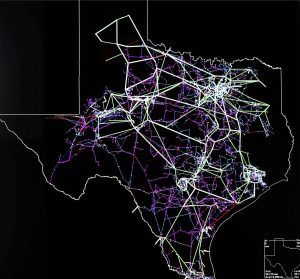
At the 2025 GCPA Spring Conference, industry leaders took a hard look at the growing pressure on ERCOT’s large load interconnection process. With over 130 GW of large load now in ERCOT’s queue—much of it driven by AI infrastructure, hyperscale data centers, hydrogen production, and industrial electrification—the system is facing a wave of demand that far outpaces what it was originally designed to handle.
The takeaway was clear: the current process is no longer fit for purpose. Without significant reforms to streamline queue management, improve grid modeling, and prioritize project viability, Texas risks stalling the energy transition and delaying critical infrastructure investments.
A Grid Planning System Under Strain
ERCOT’s interconnection model was built around utility-scale generation and a slower pace of demand growth. Large loads were added incrementally, with ample time for regional transmission planning, coordination with TSPs, and system upgrades.
Today’s reality is very different:
- High-density, fast-moving projects (e.g., AI compute, industrial load) are entering the queue at an unprecedented pace
- Many are located in transmission-constrained areas with minimal infrastructure
- Timelines have compressed, and expectations around speed-to-market have intensified
The result is a congested, backlogged, and regionally imbalanced queue, with limited visibility into which projects are viable and when they’ll energize.
What’s Changing?
ERCOT and its stakeholders are moving to address these issues through operational and policy-level interventions:
- Streamlined engineering reviews to reduce application-to-study timelines
- Increased transparency in queue status and project maturity reporting
- Enhanced coordination with TSPs to balance study volume with available resources
- Policy reforms like PGRR115 and NPRR1234 that redefine how load projects are prioritized based on readiness and grid impact. For a detailed breakdown, see Navigating ERCOT’s Evolving IX Process: A Deeper Look at PGRR115 and NPRR1234
ERCOT is also acknowledging a wider array of load interconnection configurations, including:
- Direct grid connection
- Behind-the-meter (BTM) to grid-connected generation
- Hybrid grid + BTM solutions
- Grid dual-feed and bridging power setups
- Off-grid and self-limiting facilities
These configurations offer greater flexibility but require new modeling approaches and policy clarity to ensure grid stability.
The Road Ahead: Strategic Priorities for ERCOT’s Large Load Interconnection Process
To support large load growth without compromising reliability, ERCOT’s IX process needs more than marginal improvement—it requires modernization of planning assumptions, prioritization frameworks, and project evaluation tools.
Panelists identified four focus areas:
- Flexible Load Modeling
ERCOT must adopt planning models that incorporate demand-side responsiveness and load-shaping capabilities. See Flexible vs. Firm Loads: What They Mean for ERCOT’s Future - Speculative Queue Filtering
Projects must demonstrate credible progress to stay in the queue—eliminating placeholders that distort planning. Learn more in Balancing Interconnection Costs and Timelines in the ERCOT Queue - Backup Power Considerations
Facilities with onsite generation or microgrids can reduce transmission pressure and increase resiliency. Dive deeper in Why Backup Power and Siting Strategy Are Critical for Large Load Projects in ERCOT - Capital Alignment with Readiness
Developers must match investment pace with project development maturity—helping ERCOT and TSPs prioritize real, near-term load.
Why It Matters
The ability to interconnect large loads reliably and quickly has become a key competitive advantage for Texas. Delays not only disrupt commercial project timelines—they also slow down economic development, job creation, and progress toward a lower-carbon grid.
ERCOT’s future depends on how effectively it adapts its interconnection processes to match the pace and scale of the current energy transition.
Partner with Zero Emission Grid for ERCOT’s Large Load Interconnection Process
At Zero Emission Grid (ZEG), we specialize in helping developers, infrastructure investors, and utilities navigate ERCOT’s evolving interconnection framework. We bring deep technical expertise, siting intelligence, and regulatory insight to accelerate project timelines and minimize queue risk.
ZEG supports your team with:
- Policy interpretation and IX strategy
- REST™ for identifying viable interconnection locations
- Sitra™ for in-depth due diligence, including land use and transmission risk
- Communication support with ERCOT and TSPs
- Prioritization modeling based on project flexibility and backup power
Gain insights in the evolving power grid interconnection landscape. Dive into this month’s comprehensive stakeholder meeting summaries and blog insights to stay informed and ahead of the curve. For more information on ZEG and our services, schedule a free demo today!