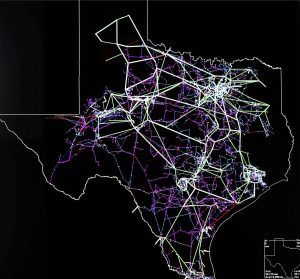
Overview of the January 16, 2026 ERCOT RPG/PLWG Meetings
At the January 16, 2026 meetings of the ERCOT RPG/PLWG continued to refine how it plans for large load growth under increasing system stress. The discussions reflected a broader shift underway in ERCOT planning: large loads are no longer treated as isolated interconnection requests, but as system-shaping drivers that materially influence transmission investment, cost allocation, and reliability assumptions.
The RPG and PLWG agendas focused on cost thresholds for Regional Generation Outlet (RGO) and RPG projects, clarification of qualified change definitions, and how these concepts interact with the growing volume of large load requests moving through ERCOT’s evolving framework. While procedural in nature, the discussions highlighted the tightening link between planning policy and real-world development risk for large load sponsors.
Large Load Growth and Planning Sensitivity
ERCOT staff reiterated that large load growth — driven by data centers, AI infrastructure, and advanced industrial facilities — continues to outpace historical expectations. Unlike traditional load growth, these facilities are often highly concentrated, fast-moving, and electrically complex, creating localized transmission stress that cannot be resolved through incremental upgrades alone.
As a result, planning sensitivity has increased. Small changes in assumed load size, in-service timing, or operational behavior can materially alter transmission needs and cost outcomes. RPG participants emphasized that maintaining discipline around assumptions is essential to ensuring that planning studies remain credible and defensible as large load penetration rises.
RPG Cost Thresholds and Project Eligibility
A major topic at the meeting was the application of RPG cost thresholds and how they affect which transmission projects qualify for regional treatment. ERCOT staff reviewed how cost thresholds are applied and how changes in load assumptions or project scope can shift a project’s eligibility.
Stakeholders expressed concern that large load-driven projects could oscillate around threshold values as assumptions evolve, creating uncertainty for both transmission developers and load sponsors. This dynamic reinforces the importance of early clarity around load characteristics and realistic modeling inputs, particularly when projects are near eligibility boundaries.
The discussion underscored that cost thresholds are not merely accounting exercises; they directly influence whether projects advance, how costs are allocated, and how quickly infrastructure can be built to support large loads.
Qualified Change Definitions and Scope Control
PLWG discussion also revisited the definition of “qualified change” and how it applies to evolving projects. ERCOT staff emphasized that qualified changes must be narrowly defined to prevent scope creep that could undermine study integrity or reopen settled assumptions.
For large load projects, this is especially consequential. Changes to load magnitude, phasing, or operating behavior — even when commercially driven — can trigger reassessment of transmission needs or project eligibility. Stakeholders acknowledged the tension between real-world development flexibility and the need for stable planning baselines.
ERCOT’s approach reflects a broader effort to limit retroactive changes that could distort planning outcomes, while still allowing legitimate refinements as projects mature.
Reliability as a Planning Constraint, Not an Afterthought
Throughout the meeting, reliability emerged as a central constraint guiding ERCOT’s decisions. Unlike regions with capacity markets or centralized resource planning, ERCOT’s energy-only structure places heightened importance on transmission readiness and accurate load forecasting.
Participants discussed how large loads can exacerbate congestion, voltage stability challenges, and contingency performance if not properly anticipated. The RPG and PLWG discussions reinforced that reliability must be embedded at the planning stage, rather than addressed reactively through operational measures.
This theme aligns with ERCOT’s broader trajectory toward more stringent upfront requirements for large loads, including clearer expectations around study scope, timing, and system impacts.
Interaction with ERCOT’s Evolving Large Load Framework
While the January 16 meetings did not introduce new large load rules, they clearly fit into ERCOT’s broader reform effort. Recent initiatives — including batch studies, revised planning guide updates, and evolving large load standards — are converging toward a more structured and conservative planning posture.
The RPG and PLWG discussions illustrated how these reforms are being operationalized: through tighter cost thresholds, disciplined change management, and closer scrutiny of assumptions that feed into regional planning decisions.
For large load developers, this means that planning outcomes are increasingly sensitive to early project definition. Ambiguity around load behavior or timing is less likely to be tolerated as volumes increase and system margins tighten.
Stakeholder Perspectives and Ongoing Concerns
Stakeholders raised concerns about balancing flexibility with predictability. Large load projects often evolve rapidly, but ERCOT’s planning framework depends on stable inputs to produce reliable results. Participants noted that misalignment between development reality and planning discipline can lead to delays, rework, or stranded investment.
ERCOT staff emphasized continued stakeholder engagement as these issues are refined, signaling that further clarification and adjustments may emerge through future RPG and PLWG meetings.
Key Takeaways from the January ERCOT RPG/PLWG Meetings
The January ERCOT RPG/PLWG meetings reinforce a critical shift in ERCOT: large loads are now planning drivers, not exceptions. Cost thresholds, qualified change definitions, and eligibility rules are increasingly consequential for whether and how projects move forward.
There is an emphasis on assumption discipline and scope control as a necessary response to real system risk. When large loads materialize faster than transmission can be built, planning frameworks must be precise to avoid reliability gaps and inefficient investment.
At the same time, the discussions highlight the importance of early technical analysis. Projects that enter planning processes with incomplete or optimistic assumptions are more likely to encounter friction as thresholds, eligibility criteria, and reliability constraints are applied.
Navigate ERCOT’s Evolving Rules
As ERCOT tightens its planning and large load frameworks, early technical diligence is becoming essential. Understanding how load assumptions affect RPG eligibility, cost thresholds, and qualified change determinations can materially influence project timelines and outcomes.
Zero Emission Grid works with large load developers, utilities, and infrastructure owners to evaluate ERCOT project feasibility before planning assumptions harden. Through detailed transmission analysis, load behavior assessment, and planning sensitivity evaluation, ZEG helps stakeholders anticipate how projects will perform under ERCOT’s evolving rules.
For organizations developing large, time-sensitive loads in ERCOT, proactive technical analysis can reduce uncertainty, protect schedules, and support more reliable integration as planning requirements continue to evolve.
Contact ZEG to learn more about how we can help you navigate ERCOT’s evolving interconnection rules.
View Meeting Materials Here.
Access More Summaries from ERCOT this month:
ERCOT TAC Meeting – 01/21/26 >> Read More
ERCOT LLWG Meeting – 01/22/26 >> Read More