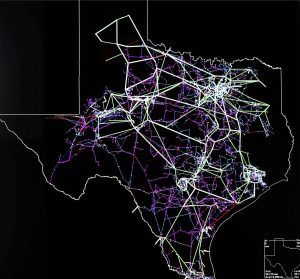
The ERCOT RPG meeting convened Thursday, September 25, to discuss a series of planning issues critical to the reliability and efficiency of the Texas grid. The meeting focused heavily on refining cost allocation methodologies, clarifying the scope of qualified changes under existing protocols, and advancing proposals that directly impact how developers approach interconnection in ERCOT. Below are the key takeaways from the session.
1. ERCOT RPG: Cost Thresholds for Regional Planning Projects
A central topic of discussion was the ongoing refinement of cost thresholds that determine which transmission projects move forward under ERCOT’s Regional Planning Process. Stakeholders debated whether the current thresholds accurately capture the scale and complexity of new reliability needs given the influx of large-scale renewables, storage, and data center projects.
- Several participants argued that the thresholds should be raised to reflect inflation and escalating construction costs, noting that existing caps no longer align with real-world project economics.
- Others countered that higher thresholds could create barriers by delaying critical reliability upgrades, especially in areas with rapid load growth.
- ERCOT staff committed to conducting further analysis of cost data and bringing updated recommendations to the group at a future meeting.
2. Qualified Change Definitions Under FAC-002
The RPG also addressed the definition of “qualified changes” under NERC Standard FAC-002. This topic has gained attention as developers seek clarity on what types of modifications to existing facilities require new or updated planning assessments.
- Transmission owners highlighted the need for consistency across the market, noting that interpretation of qualified changes currently varies by entity.
- Developers emphasized that ambiguous definitions create uncertainty and risk during interconnection studies, particularly when planning site expansions or equipment upgrades.
- ERCOT indicated that this issue will remain under review and will coordinate with stakeholder working groups to achieve a common interpretation.
3. Temporary Bypass Facility Costs
Another area of debate was how to allocate costs for temporary bypass facilities, which are sometimes required to maintain system reliability during construction of new projects.
- Developers voiced concern that current frameworks may unfairly shift these costs to interconnecting parties, even when benefits extend beyond a single project.
- Transmission providers argued that bypass facilities are often driven by the timing of specific interconnections and should therefore remain the responsibility of developers.
- The group did not reach consensus but agreed to continue discussions, with ERCOT staff tasked to evaluate cost allocation models used in other ISOs/RTOs.
4. PGRR115 Implementation Timelines
The RPG reviewed timelines associated with Protocol Revision Request PGRR115, which introduces new requirements around large-load project submission and review. Stakeholders expressed both support and concern:
- Proponents highlighted that earlier submission requirements will provide ERCOT more visibility into regional transmission needs and improve planning accuracy.
- Developers cautioned that accelerated timelines could pose challenges for projects still in the early stages of permitting or financing.
- ERCOT clarified that the goal is not to create undue burden but to align submissions with long-term planning cycles, ensuring adequate time for evaluation.
5. Alignment with NPRR1234
The meeting also touched on NPRR1234, a proposal aimed at refining interconnection and planning processes for large-loads. Participants noted the importance of aligning NPRR1234 implementation with PGRR115 to avoid conflicting requirements and duplicative efforts. ERCOT staff acknowledged this concern and committed to better cross-coordination across stakeholder groups.
Key Takeaways for Developers and Market Participants
The September 25 RPG meeting underscored ERCOT’s continued focus on balancing cost efficiency, reliability, and transparency in its planning processes. For developers, the discussions around cost thresholds, qualified changes, and bypass facilities highlight the need to stay engaged with evolving rules that directly impact project timelines and economics.
Stakeholders should expect additional workshops and technical discussions in the months ahead, particularly as ERCOT refines proposals and prepares for implementation of PGRR115 and NPRR1234.
ZEG’s Perspective
We recognize that navigating ERCOT’s planning and interconnection landscape requires both technical expertise and forward-looking strategy. Our team combines deep engineering knowledge with purpose-built software—REST® and Sitra™—to help developers anticipate regulatory changes, evaluate grid risks, and make defensible project decisions.
If you’re preparing to advance projects in ERCOT or want clarity on how these evolving rules may affect your development strategy, connect with us, we can help you turn uncertainty into opportunity.
View Meeting Materials here.