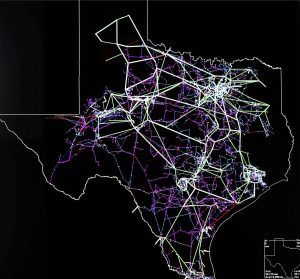
ERCOT convened its PLWG meeting on October 28, 2025, focusing on updates to ongoing reliability studies, system planning coordination, and procedural improvements within ERCOT’s long-term planning framework. The discussion highlighted ERCOT’s continued emphasis on grid modernization, renewable integration, and proactive planning to support Texas’s growing load and resource mix.
The PLWG serves as the technical backbone of ERCOT’s planning process—responsible for developing methodologies, reviewing transmission project proposals, and ensuring alignment across regional studies and stakeholder working groups. The October session reaffirmed ERCOT’s commitment to data-driven, transparent planning as new challenges emerge from rapid electrification, renewable saturation, and large-load interconnections. Below is a summary of the ERCOT PLWG meeting covering its’ key discussion points.
Addressing Rapid Electrification: ERCOT’s Regional Transmission Plan and Planning Assessment Studies
A major portion of the meeting focused on updates to ERCOT’s 2025 Regional Transmission Plan (RTP) and ongoing Planning Assessment Studies. These studies form the foundation of ERCOT’s annual transmission planning cycle, identifying necessary upgrades to maintain reliability and reduce congestion across all zones. Key updates included:
- Reliability Studies Progress: ERCOT planners reported progress on power flow and stability analyses for major 345 kV corridors, particularly those in the Far West, South, and Coastal regions.
- Regional Project Coordination: Transmission Service Providers (TSPs) are coordinating closely with ERCOT on proposed projects under review for the 2026 transmission plan. Several studies remain in the validation stage to confirm cost-benefit alignment and reliability impact.
- Economic and Reliability Drivers: ERCOT continues to refine how it evaluates “dual-benefit” projects—those that address both reliability concerns and market efficiency through congestion cost reduction.
- Modeling Enhancements: The planning group is introducing updated base cases for 2030 and 2035 to incorporate revised renewable forecasts and updated load projections.
This ongoing work ensures ERCOT’s grid development aligns with Texas’s rapidly evolving energy mix—balancing operational reliability with the flexibility needed for increasing renewable and storage penetration.
Renewable Saturation and Resource Planning
ERCOT continues to experience unprecedented renewable growth, with solar, wind, and storage projects representing the vast majority of new interconnection requests. The PLWG reviewed study assumptions related to renewable buildout and discussed the implications for long-term system performance. Highlights included:
- Renewable Saturation in West and South Zones: These regions remain the focal points of system congestion, prompting ERCOT to model additional transmission reinforcements to accommodate renewable growth.
- Energy Storage Representation: The group discussed new modeling practices for utility-scale storage, emphasizing realistic dispatch assumptions to capture system flexibility benefits.
- Hybrid Resource Coordination: ERCOT is developing planning methodologies that treat solar-plus-storage and wind-plus-storage facilities as composite resources, allowing for more accurate system performance predictions.
- Voltage Stability Studies: With growing inverter-based generation, ERCOT continues voltage ride-through and reactive support assessments to ensure compliance with reliability criteria.
The takeaway for developers is clear: transmission expansion is being shaped directly by renewable siting patterns. Projects located in well-studied, infrastructure-ready areas will likely benefit from faster interconnection progress and reduced curtailment exposure.
Large-Load Interconnection and Queue Process Updates
The PLWG reviewed ongoing enhancements to ERCOT’s Generation Interconnection Process, including data quality initiatives and queue transparency improvements. Key themes included:
- Data Submission Standards: ERCOT is enforcing stricter validation on generation and load interconnection applications, requiring more complete technical data packages at the time of submission.
- Queue Transparency: Developers will gain greater visibility into study timelines, assumptions, and dependencies as ERCOT implements new reporting procedures for queue updates.
- Large-load Interconnection Process Reform: Coordination with the Large Load Working Group (LLWG) continues to align procedures for high-load projects and renewable interconnections that share system constraints.
- Study Timelines: ERCOT acknowledged the growing complexity of studies due to simultaneous renewable and load requests, underscoring the importance of accurate modeling data and proactive communication between stakeholders.
These process improvements aim to create a more predictable interconnection environment—reducing uncertainty for developers while preserving ERCOT’s technical rigor.
Reliability and Future Planning Priorities
Reliability remains at the core of ERCOT’s planning philosophy. The PLWG discussed several ongoing and upcoming reliability analyses that will inform transmission and interconnection decisions in 2026. Key focus areas:
- Extreme Weather Readiness: ERCOT is modeling future reliability scenarios under high-stress conditions, including extended peak events and low renewable output days.
- Load Forecast Scenarios: New forecasts incorporate data center growth, industrial electrification, and emerging hydrogen production facilities expected through 2030.
- Grid Resilience Initiatives: Planners are evaluating non-wires alternatives, such as battery storage and demand-side solutions, to complement transmission upgrades in constrained areas.
- Scenario-Based Long-Term Planning: ERCOT will expand its scenario library to include high-renewable and high-load futures, ensuring transmission plans remain adaptive to multiple possible outcomes.
This forward-looking framework reflects ERCOT’s ongoing transition from reactive to proactive grid planning—where foresight and flexibility are now central to long-term reliability assurance.
Key Takeaways for ERCOT Stakeholders
The October 2025 PLWG meeting highlighted a continued shift toward proactive, holistic transmission and resource planning. Key takeaways include:
- Transmission studies are advancing faster and deeper. ERCOT’s 2030+ modeling horizon now integrates renewable growth, large-load expansion, and policy-driven considerations.
- Renewable integration is driving change. Transmission upgrades and study methodologies are evolving to accommodate inverter-based and hybrid resource performance.
- Queue process reforms are improving transparency. Developers should prepare high-quality interconnection data and track ERCOT’s process updates closely.
- Reliability remains the foundation. Long-term planning now accounts for resilience, extreme weather events, and dynamic system operations.
For renewable developers, transmission owners, and large-load customers, the direction is clear: ERCOT’s planning process rewards early engagement, data accuracy, and alignment with system priorities.
We help renewable developers, investors, and utilities navigate ERCOT’s planning, interconnection, and reliability frameworks. From transmission studies and queue strategy to deliverability analysis and voltage stability modeling, ZEG ensures your projects are ready for ERCOT’s evolving technical and regulatory requirements.
Our team combines deep system modeling expertise with policy insight—bridging the gap between developers and grid planners. Whether your goal is to optimize renewable siting, mitigate congestion risk, or strengthen interconnection readiness, we provide the guidance and precision to move your projects forward efficiently.
Contact ZEG today to align your development strategy with ERCOT’s 2025–2035 planning priorities and ensure your renewable or large-load projects are positioned for long-term success.
For more on the Large-load interconnection, Renewable Saturation, and Rapid Electrification across ERCOT, view meeting materials here.