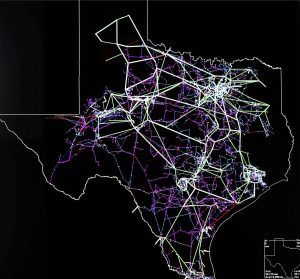
The ERCOT PLWG meeting convened Thursday, September 25, for a critical session focused on refining planning rules and aligning interconnection policy with grid investment priorities. The official meeting was featured a full agenda of NPRRs/PGRRs, technical planning proposals, and interconnection cost reporting discussions. Below is a brief summary.
Redefining Cost Thresholds: NPRR1274 (RPG Estimated Capital Costs)
One of the core agenda items, NPRR1274, proposes updating how ERCOT and the Regional Planning Group set Estimated Capital Cost Thresholds for transmission projects. Under current approaches, some projects pass through simplified cost “screening,” while others require full scaled estimates. The meeting focused on refining those thresholds, tightening which projects need full estimates versus estimates based on rougher heuristics.
For developers, tighter thresholds may increase upfront engineering burden and project development cost, especially in regions with complex network topology. It’s vital to track how NPRR1274 is redlined and whether it introduces transitional allowances for ongoing projects.
GRL & Load Reliability: PGRR126 / NPRR1284
PLWG also considered PGRR126 (and its companion NPRR1284) pertaining to the Guaranteed Reliability Load (GRL) process. GRL ensures that certain large or critical loads receive enhanced reliability guarantees in the power system planning process.
Discussions touched on cost allocation (who pays when GRL causes network upgrades) and interactions with interconnection queue processes. For data centers or large industrial loads aiming for GRL status, this is a key area: a favorable revision could reduce cost uncertainty or improve certainty of service.
Generation Modeling in Planning: PGRR127
Another focus was PGRR127, which deals with how proposed generation is included in ERCOT’s planning models. Changes here can affect dispatch assumptions, utilization of new resources, and system stress modeling. If ERCOT tightens assumptions—e.g. minimum capacity factors, ramp limits, or outage probabilities—then economic projections for new generation may shift.
Developers will want to compare any adopted model assumptions to their internal financial models, as gaps could lead to revenue surprises or altered project rankings.
Grid-Enhancing Technologies: PGRR128
PLWG also weighed PGRR128, a proposal to incorporate Grid-Enhancing Technologies (GETs) into the regional transmission planning framework. These may include technologies like dynamic line ratings, flow control devices, or topology optimization.
The key debates centered on:
- Which GETs qualify (hardware, software, operational controls)
- Cost allocation (who pays vs who benefits)
- Modeling assumptions (how to simulate controllable elements vs static network)
If approved favorably, this could reduce the need for large traditional upgrades in some corridors, lowering developer burden and improving system flex.
GTC Exit & Cost Reporting: PGRR130 & PGRR131
Two adjacent items, PGRR130 (GTC Exit Solutions) and PGRR131 (Interconnection Cost Reporting), address critical risk and transparency areas.
- GTC Exit Solutions: This item examines how a generator may exit or withdraw from interconnection after initial commitment, and what liabilities remain (e.g. cost responsibility, network impact). Clear exit rules are essential to mitigate stranded-cost risk.
- Interconnection Cost Reporting: This item refines how transmission-connected generators must report actual vs estimated interconnection costs. Enhanced reporting ensures accountability and helps regulators, but it can also impose extra administrative burden on developers.
What’s Next & Developer Insights
The themes from PLWG’s Sept 25 meeting point to key areas to watch and act on:
- Compare proposed redline language for NPRR/PGRRs with your internal modeling assumptions and cost structures.
- Monitor how ERCOT adopts modeling constraints (capacity, ramp, outage factors), these feed directly into project valuation.
- Stay engaged in stakeholder comment phases; early input often shapes final outcomes.
- Watch for how GETs are integrated, if given favorable treatment, they may ease network upgrade costs in many corridors.
At ZEG, we help clients parse these technical and policy shifts so you can stay ahead. Want a side-by-side comparison of proposed vs current rules? Contact us today for help with your renewable energy project.
View Meeting Materials here.