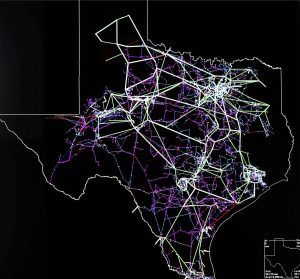
The ERCOT Planning Working Group (PLWG) met November 18 to advance key components of the Regional Transmission Plan, review RTPDP modeling refinements, continue work on transmission project classifications, and coordinate with RPG on major load-driven upgrades across the system. The meeting combined planning-model methodology updates, Guide revision discussions, and several follow-ups from summer/fall workshops. Below is a structured recap of the major takeaways.
RTPDP & System Planning Updates
2026 Regional Transmission Plan Development (RTPDP)
ERCOT provided updates on the 2026 RTPDP workstream, including refinements to the load forecast, scenario assumptions, and model inputs feeding into the steady-state and stability analysis packages.
Key discussion points included:
- Load Forecast Adjustments: Updated assumptions for data center growth in North, Austin, and West zones, reflecting more aggressive 2030+ adoption curves submitted by TDSPs and developers.
- Resource Forecast Incorporation: Updates to solar, wind, and storage siting assumptions based on interconnection queue data, attrition factors, and commercial operation estimates.
- Constraint Identification Methodology: ERCOT walked through preliminary thermal and voltage screening outputs and flagged candidate constraints likely to appear in the near-final plan.
- Scenario Variance Sensitivity: PLWG members discussed how extreme-weather and stressed-grid conditions should be weighted in the final plan, continuing a 2025 dialogue around modeling the operational envelope affected by large loads and IBR penetration.
ERCOT confirmed that the near-final RTPDP package will be available for review prior to ROS and Board filings in early 2026.
Planning Guide Revisions
PLWG reviewed several Planning Guide sections requiring refinement based on market feedback, PGRR activity, and the increasing prevalence of high-density, fast-growth load pockets.
PGRR Updates & Clarifications
The meeting included the following items:
- PGRR Revisions for Load Forecast Reporting: Updates to reflect improved large-load identification and reporting timelines from TDSPs; enhancements were intended to better synchronize LLWG, PLWG, and RPG reporting.
- Voltage Ride-Through & Dynamic Modeling Coordination: Clarifications on how Planning Guide requirements will interact with NOGRR272-aligned modeling standards for ESRs and other inverter-based resources.
- Reliability-must-run (RMR) Modeling Requirements: ERCOT and stakeholders discussed where reliability-driven commitments should be documented within the Planning Guide versus the Protocols.
In general, Planning Guide alignment remains an ongoing 2025 priority as ERCOT works to consolidate reliability processes, LLWG workflows, and system modeling expectations.
RPG Coordination & Major Transmission Projects
PLWG reviewed progress and status updates for several large-scale RPG-driven infrastructure projects currently under study or awaiting final recommendations. These updates focus on thermal constraints, reactive-power needs, and multi-year staging strategies.
Highlighted projects included:
- Large Industrial Load Additions: Multiple TSPs introduced reliability assessments tied to data center clusters and semiconductor expansions across Central, North, and Houston zones.
- Transmission Reinforcement Studies: ERCOT shared initial voltage stability analyses for corridors requiring capacitor, STATCOM, or 345-kV upgrades to support 2030 system strength.
- Tier-1 & Tier-2 Project Pathways: Stakeholders reviewed timelines for upcoming CCN filings, ISDs, and model validation needed to move projects toward RPG endorsement.
Stakeholders noted continued congestion impacts related to rapid West Texas development, emphasizing the need for updated operational mitigation strategies while longer-term projects advance.
Interconnection Modeling, ERCOT Studies & Data Needs
ERCOT presented ongoing issues related to interconnection-data quality and modeling, particularly for newly proposed hybrid resources and large-load campuses. The group revisited:
- Model Submission Quality: Several late-2025 submissions needed resubmissions due to incorrect voltage settings, missing dynamic models, or incomplete short-circuit data.
- IBR Modeling Accuracy: PLWG reiterated that improved PSCAD/PSSE model consistency is essential for accurate system strength forecasts and reliability studies.
- Queue Timeline Alignment: ERCOT reviewed a proposed draft workflow to align Planning Engineers, GINR reviewers, and LLWG processes when large loads and generators are co-sited.
Members continued stressing strong coordination with LLWG, TAC, and RPG — particularly with data centers, hydrogen electrolyzers, and crypto facilities increasing in volume and complexity.
Next Steps, Follow-ups & Upcoming 2026 Deliverables
ERCOT outlined key milestones leading into Q1 2026:
- Final RTPDP review cycle
- Additional Planning Guide revision proposals
- RPG coordination for Tier-1 projects requiring early-2026 votes
- Continued modeling workshops for inverter-based resources
- Formalization of data-validation checkpoints to improve study timelines
- PLWG will meet again in December, with a consolidated planning package targeted for ROS and TAC review.
ZEG supports developers, utilities, and large-load customers in navigating ERCOT’s planning processes, validating interconnection models, identifying transmission constraints, and preparing for RTPDP-driven impacts on siting and reliability. Whether you’re advancing a new project, validating your system model, or preparing for 2026 Planning Guide updates, our team can accelerate timelines and reduce study risk.
Contact us to turn PLWG outcomes into an actionable siting and modeling roadmap tailored to your portfolio.
To access more information about ERCOT, explore meeting materials here.