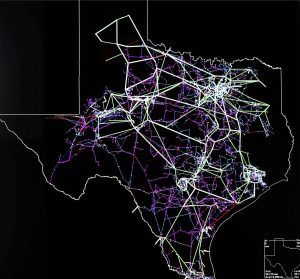
In the recent RPG meeting, ERCOT provided valuable insights into how they are adapting its planning methodologies to account for evolving load profiles, renewable energy variability, and the upcoming 2025 Regional Transmission Planning (RTP) process. Stakeholders raised a range of technical questions, prompting detailed discussions on load growth, sensitivity weather years, distributed energy resources (DERs), net peak load calculations, and RTP topology planning.
Load Growth Over Time and Impact on Evaluation Methodologies
A foundational question raised during the meeting concerned how ERCOT accounts for the substantial growth in system load over the past decade and a half. One stakeholder highlighted that while a 70-gigawatt load level in 2008 represented a peak or high load scenario, the same 70-gigawatts today is relatively less significant due to the expansion of the electric grid and increasing demand over the years.
The question was whether ERCOT’s evaluation methodology for renewable integration and grid reliability weighs load values equally regardless of the time period or adjusts for this growth by considering absolute megawatt-hour values in context.
ERCOT’s response clarified a critical point: the load variables used in their analysis do not directly reflect the actual load quantities of historical years but rather the load profiles—that is, the shape and timing of load throughout the day and year—for those historical periods. These profiles are then scaled to the forecasted system load for the target year, in this case, 2030.
This means that although the analysis references load profiles from past years such as 2008, the absolute load values applied are consistent with what ERCOT expects in 2030. This approach allows ERCOT to retain realistic variability in load shape caused by weather and behavioral patterns from past years, while evaluating grid performance under future load conditions and renewable penetration.
This nuanced approach ensures that the methodology does not unfairly weight earlier years with lower load volumes or treat those values equivalently to today’s or future higher loads. Instead, it uses historical variability patterns combined with future growth projections, improving the accuracy and relevance of renewable integration studies.
Selection of Sensitivity Weather Years and Focus on Key Constraints
The conversation then turned to the choice of sensitivity weather years used to assess how variability in weather impacts renewable generation and grid constraints. Stakeholders asked why ERCOT focused particularly on two constraints: the Panhandle and West Texas regions, and why sensitivity weather years were not selected for other constraints as well.
ERCOT’s experts explained that the methodology used can theoretically be applied to any grid constraint sensitive to renewable generation patterns. However, for this study, the Panhandle and West Texas constraints were selected deliberately because they are widely known to be highly dependent on weather conditions and renewable generation output. These constraints often represent the largest operational challenges under varying renewable energy scenarios.
ERCOT welcomes stakeholder feedback and may expand this approach to include additional constraints in future analyses, particularly those known to be renewable-dependent. This iterative approach ensures that ERCOT’s methodology remains responsive to stakeholder needs and the evolving grid landscape.
Further clarifying the weather year selection process, ERCOT affirmed that the approach aligns with an established white paper methodology. According to this approach, economic evaluation criteria must be met for the base weather year as well as the sensitivity weather years for projects to be considered viable. ERCOT’s process averages the base weather year results with those from sensitivity weather years to ensure that project evaluations are robust across a range of possible conditions.
Consideration of Distributed Energy Resource (DER) Growth in Load Forecasts
As the grid evolves, Distributed Energy Resources (DERs)—such as rooftop solar, battery storage, and demand response—are increasingly impacting load shapes and grid dynamics. A stakeholder raised an important question about whether DER growth has been factored into the selection of weather years and load profiles, given that DER penetration was minimal in earlier years but is expected to be substantial in the near future.
ERCOT confirmed that DERs are incorporated into the load forecasts used in the analysis. Behind-the-meter generation, including DERs, forms part of the load variables, ensuring that changes in load shape and demand driven by DER deployment are considered in evaluating grid reliability and renewable integration scenarios.
This inclusion allows ERCOT to more accurately capture the future grid’s complexities and ensure that planning accounts for new distributed resources alongside traditional generation and transmission assets.
Net Peak Load Calculation and Regional Specificity
A technical question followed on how net peak load is calculated in the presence of high renewable generation in certain weather zones, particularly in the Far West and West Texas areas. The concern was that if renewable generation exceeds local load in a specific weather zone, the net peak load there could become negative, and how ERCOT handles such situations.
ERCOT clarified that net peak load is calculated on a system-wide basis, rather than at individual weather zone levels. This means the analysis does not isolate negative net peak load scenarios by region but instead evaluates the overall system net peak load, which remains positive. This approach simplifies the modeling and focuses on system reliability and planning from a holistic perspective, rather than regional anomalies.
2025 RTP Load Forecast and Topology Planning Timeline
Stakeholders also sought updates on the 2025 Regional Transmission Planning (RTP) process, particularly regarding when ERCOT plans to finalize the initial base cases and load levels for analysis.
ERCOT representatives noted that due to ongoing regulatory proceedings—specifically a good cause exception filed with the Public Utility Commission (PUC)—the finalization of the initial cases and load forecasts has been delayed. Discussions on this exception took place in recent PUC meetings and are expected to continue into early June 2025. Only once the good cause exception is granted will ERCOT proceed with releasing finalized load forecasts and initiating RTP base case development.
Additionally, questions were raised about whether the 2025 RTP starting topology would include all the projects recommended in the 2024 RTP. ERCOT responded that these details are still under discussion and have not yet been finalized, reflecting the iterative and collaborative nature of transmission planning.
Meeting Conclusion and Next Steps
The meeting concluded with an invitation for further stakeholder feedback on the methodologies discussed, particularly the potential inclusion of additional renewable-dependent constraints in future sensitivity analyses. Participants expressed appreciation for the transparency and detail provided and looked forward to continued collaboration through the upcoming meetings.
ERCOT’s approach to integrating load growth, DER impacts, and renewable variability into grid planning reflects an evolving, data-driven methodology designed to ensure reliable and cost-effective grid operation into the future. The careful consideration of load profiles, weather sensitivity, and regulatory timelines highlights ERCOT’s commitment to incorporating stakeholder input and adapting to a rapidly changing energy landscape.
View Meeting Materials
Gain insights in the evolving power grid interconnection landscape. Dive into this month’s comprehensive stakeholder meeting summaries and blog insights to stay informed and ahead of the curve. For more information on ZEG and our services, schedule a free demo today!