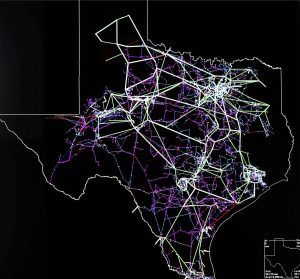
In the recent LLWG workshop held by ERCOT, system operators, developers, and grid consultants gathered to address urgent reliability concerns surrounding large electronic load (LEL) interconnections—particularly from data centers, crypto mining operations, and high-growth AI facilities. These loads are creating new challenges for voltage ride-through standards, grid fault tolerance, and system-wide stability across renewable-rich regions like West Texas and the Panhandle.
Large Load Ride-Through Assessment & LLIS Process Updates
1. Voltage Ride-Through and Grid Reliability Risks
- ERCOT presented modeling studies showing that certain faults could cause voltage dips below 0.70 p.u. for over 20ms, threatening the stability of up to 1,500 MW of large electronic loads—half the modeled capacity in affected areas.
- The concern is that these loads may trip offline during routine grid faults, risking cascading frequency instability and, under worst-case conditions, a potential system collapse if over 2,600 MW are lost suddenly.
- These issues are increasingly critical as grid decarbonization accelerates, with new renewable energy projects and large loads entering the ERCOT interconnection queue at record pace.
2. ERCOT Proposes Solutions to Manage LEL Impacts
- Near-term solutions include:
- Transmission upgrades
- Synchronous condensers
- New voltage ride-through (VRT) standards
- Development of ancillary services to mitigate frequency dips
- Stakeholders are encouraged to provide technical presentations and feedback, particularly for local event management, area-wide solutions, and self-supplied VRT systems.
3. Enhancing the Large Load Interconnection Study (LLIS) Process
- ERCOT is implementing a revised LLIS framework to improve the screening, modeling, and approval process for large load projects.
- A new Request for Information (RFI) will be issued to TSPs for each load to collect critical data, including updated dynamic models, protection settings, and backup generation capabilities.
- Case-by-case energization decisions will be made for pending projects, informed by ride-through readiness and system impact.
4. Required Survey for TSPs and Load Customers
- A standardized Large Load Data Survey is now required for new interconnection studies, with a focus on:
- Load modeling in PSS/E and PSCAD formats
- Detailed dynamic performance characteristics
- Fault-critical behavior and stability margins
- All survey responses are due by August 2025. Inaccurate or incomplete data could trigger restudy requirements and delay project approvals.
5. Call for Technical Solutions (Due July 11)
- ERCOT will host a technical solution workshop on July 11, seeking actionable, engineering-led proposals to address the challenges highlighted.
- Proposals should focus on operational value—not sales pitches—and cover local, system-wide, and load-side solutions for voltage stability and ride-through compliance.
Why It Matters: Planning for Grid Resilience in the Age of AI and Renewables
The rise of large electronic loads and rapid renewable energy integration in ERCOT territory is redefining what it means to build a reliable power grid. As consultants and developers navigate an increasingly complex interconnection environment, early engagement, accurate modeling, and adherence to ERCOT’s evolving standards are more critical than ever. For those in renewable energy consulting, grid planning, or large load development, this workshop highlights the importance of collaboration, transparency, and innovation in ensuring Texas’s power grid remains resilient under growing strain.
Need help navigating ERCOT’s large load interconnection process or ride-through standards? We offer tailored support for interconnection studies, model validation, and grid impact assessments—ensuring your project is technically sound, compliant, and grid-ready. Contact us to secure your project’s success.
View Meeting Materials here.