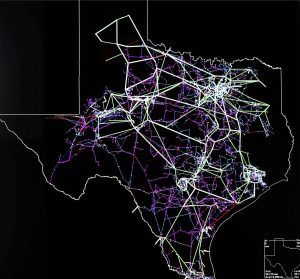
The ERCOT Inverter-Based Resource Working Group (IBRWG) meeting on April 18, 2025, offered significant insights into maximizing Inverter-Based Resource (IBR) capabilities in light of the NOGRR245 process. The discussions centered around reducing risks and enhancing IBR ride-through capabilities, which are essential to the stability and reliability of the Texas grid.
The NOGRR245 Process: Maximizing IBR Performance
The meeting began with a detailed explanation of the NOGRR245 process, which is designed to improve the ride-through capabilities of IBRs during grid disturbances. The session provided several examples of IBR capability assessments and adjustments, focusing on the maximization of IBR performance through strategic configurations. The primary goal is to ensure IBRs can withstand grid fluctuations without triggering unnecessary shutdowns. This is achieved by configuring IBR plant protections within equipment ratings to optimize ride-through capability, which is crucial for grid resilience.
The importance of coordinating and optimizing protection settings, including OEM (Original Equipment Manufacturer) settings, ride-through curves, and protection coordination, was emphasized. These factors play a pivotal role in maximizing the potential of IBRs without overburdening equipment ratings. The session revealed that achieving maximization requires a balanced approach, ensuring that protections do not exceed the technical capabilities of the hardware.
Challenges and Lessons Learned: ERCOT IBRWG
Several challenges emerged from the exercise, with a key issue being the varied interpretations of what “maximization” entails. The absence of standardized guidelines led to inconsistent settings and documentation from OEMs across different IBR models. In addition, aligning commissioning practices for new assets with maximization goals proved difficult, as it often involved reconciling outdated approaches with new requirements.
A major takeaway from the session was the need for better standardization. For example, creating a unified framework for IBR parameter settings and utilizing standardized data formats (such as the IBR file) would ensure greater consistency in the implementation of maximization strategies. This could streamline the Request for Information (RFI) processes and make it easier for stakeholders to assess and address protection settings and their impacts on IBRs.
Zero Emission Grid’s Contribution
Mike Tabrizi, representing ZEG, provided a unique perspective based on the company’s experiences with NOGRR245. ZEG’s input highlighted the disparities between older plants with outdated inverters and newer projects equipped with more modern systems. The challenges associated with older units, especially when verifying inverter capabilities and complying with requirements such as PGRR109, were discussed in depth. In contrast, newer projects saw more streamlined processes due to better organization and verification practices.
ZEG also emphasized the importance of engineering assessments over purely document-based or numerical approaches. A thorough engineering analysis, including PSCAD simulations, is essential for accurately determining the maximization potential of IBRs. ZEG cautioned against overcommitting to RFIs without sufficient analysis and highlighted the need for holistic assessments rather than relying solely on inverter specifications.
Download our detailed presentation on NOGRR245 here > NOGRR-245-Docusign-Submittals-1.pdf.
Industry Recommendations
Several recommendations emerged from the meeting that could significantly improve the NOGRR245 process. The first was to develop a standardized framework for IBR parameter settings that is accessible to all stakeholders, ensuring consistency across the industry. Additionally, greater collaboration among industry participants is necessary to address data access and improve the alignment of protection settings at a broader level.
There was also a strong call for detailed simulations, such as PSCAD, to provide a more realistic understanding of the maximization capabilities of IBRs. These simulations help bridge the gap between theoretical inverter specifications and actual plant-level performance, ensuring a more accurate assessment of IBR capabilities.
Looking Ahead: NERC PRC-029 and IEEE 2800 Comparisons
In a follow-up presentation, the meeting also compared various industry standards, including NERC PRC-029, IEEE 2800, and NOGRR255, which govern IBR performance. PRC-029, which aims to improve disturbance data reporting, is set to take effect in July 2025. One of the main distinctions between these standards is that PRC-029 drops the requirement for feeder-end fault recording, a mandate that NOGRR255 retains. PRC-029 and IEEE 2800 focus on different aspects of IBR performance, with NOGRR255 being the most rigorous in technical requirements.
The discussion around these standards emphasized the need for clear distinctions in data requirements, including fault recording, sequence of events (SOE) data, and dynamic disturbance recording (DDR). The complexities surrounding these standards underscore the importance of accurate data collection and reporting for the effective functioning of IBRs within ERCOT’s grid.
A Path Forward for IBR Maximization
The ERCOT IBRWG meeting on April 18, 2025, offered valuable insights into the ongoing efforts to maximize the performance and reliability of IBRs under the NOGRR245 process. The discussions underscored the need for standardized practices, detailed engineering assessments, and improved data-sharing frameworks. As Texas continues to integrate renewable energy resources into the grid, ensuring that IBRs can perform reliably during disturbances will be critical to maintaining grid stability.
Moving forward, the recommendations shared during the meeting, such as the use of standardized parameter settings and the adoption of advanced simulation tools, will be essential in guiding the industry toward more robust and resilient IBR integration.
Ready to take your renewable energy projects to the next level? Speak with our experts at Zero-Emission Grid today and discover how our innovative solutions can streamline your grid siting process. Sign up now for a free demo and see firsthand how we can help you accelerate your project’s success.