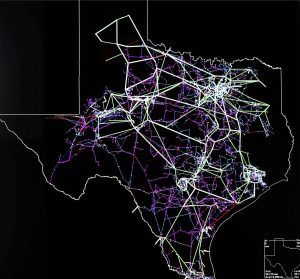
The recent ERCOT PLWG meeting covered grid management updates and technical revisions that will directly impact generation interconnection, load interconnection, and grid stability across Texas. The discussions emphasized the latest developments in transfer analysis, series-compensated transmission lines, dynamic load models, and Planning Guide Revision Request (PGRR) proposals.
SSR (Sub-Synchronous Resonance) Impact on Generators
ERCOT emphasized that SSR mitigation is particularly important when interconnecting new generators near older facilities. Developers are encouraged to engage with OEMs (Original Equipment Manufacturers) and third-party consultants to ensure that their equipment is tuned properly to prevent resonance issues. For generation developers, understanding the risks of SSR and ensuring that appropriate mitigation strategies are in place will be critical for maintaining long-term system stability.
PGRR120
Prevent new generation projects from interconnecting such that they are N-1 (one Credible Single Contingency) from being radial to a series capacitor(s).
- Effective date of PGRR will allow some projects in progress (Security Screening Study stage) to move forward.
- Establish the timing of the determination of the number of Credible Single Contingencies.
- Generator modifications addressed.
- Real time SSO mitigation.
PGRR115
This Planning Guide Revision Request (PGRR) creates a new process for studying the reliability impacts of all Large Loads (as defined in the accompanying NPRR1234) seeking to interconnect to the ERCOT System. As with the Full Interconnection Study (FIS) required for proposed Generation Resources, this PGRR requires a Large Load Interconnection Study (LLIS) for each new Large Load meeting applicability requirements that is proposed to interconnect to the ERCOT System. Like the FIS, the LLIS will consist of a similar suite of studies conducted by one or more affected Transmission Service Providers (TSPs). For more on NPRR1234, explore our breakdown of the policy here.
This PGRR describes these studies in detail and establishes timelines for the review of these studies and the completion of other steps in the interconnection process. This PGRR also: requires all Large Loads evaluated via the LLIS to be included in the existing quarterly stability assessment prior to Initial Energization; adds additional reliability performance criteria for the inclusion and evaluation of Large Loads in planning studies; adds requirements that must be met prior to including a Large Load in the ERCOT Network Operations Model; and establishes required interconnection equipment for both Generation Resources and Large Loads.
During this session, following comments were discussed:
Load Commissioning Plan (LCP): An agreed upon schedule between the interconnecting Transmission Service Provider (TSP) and Interconnecting Large Load Entity (ILLE) for connecting a Large Load in increments defined by the ILLE, compiled in the format prescribed by ERCOT, detailing dates, cumulative peak Demand amounts, and transmission upgrades that would be required to be in service for each amount of peak Demand. The LCP shall cover the time from the Initial Energization date up to the final amount of peak demand.
Reliability Performance Criteria: Including of outage of the Large Load into the definition of Planning Contingencies. With all Facilities in their normal state, following an outage of a Large Load with or without a three-phase fault, all Facilities shall be within their applicable Ratings, the ERCOT System shall remain stable with no cascading or uncontrolled Islanding, and there shall be no non-consequential Load loss.
Inclusion of Large Loads into ERCOT’s existing Quarterly Stability Assessment:
- ERCOT shall conduct a stability assessment every three months to assess the impact of planned large generators and Large Loads subject to the requirements of Section 9.2.1, Applicability of the Large Load Interconnection Study Process, connecting to the ERCOT System. The assessment shall derive the conditions to be studied with consideration given to the results of the FIS stability studies for large generators, with planned Initial Synchronization in the period under study. ERCOT may study conditions other than those identified in the FIS stability studies.
- Loads described in the paragraph above that are not included in the assessment as result of failing to meet the prerequisites by the deadlines as listed in the table below will not be eligible for Initial Energization during that three-month period. The timeline for the quarterly stability assessment shall be in accordance with the following table:
| Generator Initial Synchronization or Large Load Initial Energization Date | Last Day for an IE, Resource Entity, or TSP to meet prerequisites as listed in paragraphs (4) and (5) below | Completion of Quarterly Stability Assessment |
| Upcoming January, February, March | Prior August 1 | End of October |
| Upcoming April, May, June | Prior November 1 | End of January |
| Upcoming July, August, September | Prior February 1 | End of April |
| Upcoming October, November, December | Prior May 1 | End of July |
Pursuant to PGRR115, the following prerequisites must be satisfied prior to the inclusion of a new Large Load or Load modification subject to the requirements of Section 9.2.1 in the quarterly stability assessment:
- The Large Load has met the requirements of Section 9.4, LLIS Report and Follow-up, and Section 9.5, Interconnection Agreements and Responsibilities.
- The Load Commissioning Plan has been updated to reflect the results of the LLIS as required by paragraph (1) of Section 9.2.4, Load Commissioning Plan;
- The interconnecting TSP has provided to ERCOT the dynamic load model it received from the ILLE per paragraph (1) of Section 9.3.4.3, Dynamic and Transient Stability Analysis, and written affirmation that no changes to the project information have been communicated by the ILLE, per Section 9.2.3, Modification of Large Load Project Information, that would invalidate the model.
The following elements must be complete:
- ERCOT presented its proposed requirements for modeling of Large Loads.
- ERCOT presented its proposed Large Load Interconnection Study (LLIS) Process, its applicability, submission process, Load Commissioning Plan, and modifications to Large Load Application Submissions
Transmission Service Bus Limitations:
ERCOT introduced the concept of a transmission service bus, which limits large load interconnections to 1,000 MW per service bus. This interconnection threshold was set to mitigate grid instability risks, especially in areas with large-scale loads and co-located generation. As developers consider larger projects, it’s crucial to understand how the 1,000 MW cap applies to various configurations within substations, as well as its potential impact on interconnection timelines.
ERCOT is conducting further analysis to refine this threshold, and developers will need to align their transmission design strategies with these updated limits to avoid complications in the interconnection process.
Dynamic Load Model Requirements for TSPs:
The meeting clarified the new dynamic load model requirements for Transmission Service Providers (TSPs) and large load entities. Developers must ensure that their dynamic load models are up to-date and accurately reflect current grid conditions to avoid delays in the QSA process. TSPs will also be responsible for notifying customers about compliance requirements but will not be held accountable for customer behavior.
Next Steps for Large Load Developers:
ERCOT aims to finalize updates to the planning criteria and interconnection standards by the end of the year. Developers should stay informed by reviewing the latest drafts and attending upcoming meetings to ensure they are prepared for any changes in grid reliability standards or interconnection protocols. The next meeting, scheduled for December, will focus on finalizing any remaining technical revisions. For more on ERCOT’s Large Load interconnection process, explore our blog on ERCOT’s Large Load Interconnection Process: Complexity, Congestion, and the Road Ahead.
Gain insights in the evolving power grid interconnection landscape. Dive into this month’s comprehensive stakeholder meeting summaries and blog insights to stay informed and ahead of the curve. For more information on ZEG and our services, schedule a free demo today!