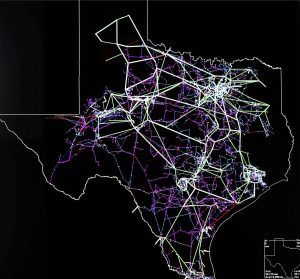
ERCOT LLWG 05/21/26 Meeting Summary
ERCOT LLWG Overview
The May 21, 2026 ERCOT Large Load Working Group (LLWG) meeting focused primarily on ERCOT’s transition toward the Batch Zero framework for large load interconnections, growing reliability concerns associated with large computational loads (LCLs), and future transmission planning concepts. Key discussions included NERC reliability initiatives, the large load interconnection queue, Batch Zero readiness activities, interim voltage ride-through (VRT) assessments, dynamic model requirements, and potential technical solutions for integrating AI-driven data center loads.
1. NERC Updates
NERC provided updates on ongoing large load reliability initiatives related to large computational loads such as AI data centers and crypto-mining facilities. Discussions focused on Project 2026-02, which aims to establish registration criteria and future reliability standards for Computational Load Entities.
The initial “Phase 1” effort will focus on foundational process-related requirements needed to support reliable integration of computational loads into the Bulk Power System (BPS). The proposed essential actions include requirements related to:
- Data sharing between computational load owners, planners, and operators
- Interconnection study processes and dynamic modeling requirements
- Protection coordination and high-resolution monitoring
- Commissioning procedures coordinated with planners and operators
- Operational communication protocols and emergency response requirements
Future phases may address additional technical areas such as dynamic model validation, voltage and frequency ride-through, annual transmission planning, UVLS/UFLS considerations, EMT modeling, balancing, and critical infrastructure protection requirements.
The proposed Phase 1 timeline includes:
- May–July 2026: Draft development, Rules of Procedure coordination, and stakeholder engagement
- August 2026: Initial industry comment posting
- September–November 2026: Review of stakeholder comments and additional postings
- December 2026: Targeted Board adoption of the Phase 1 standards package
The presentation emphasized that the long-term goal is to establish:
- New glossary definitions and registration criteria for computational load entities.
- Reliability standards addressing reliability risks associated with integrating large computational loads into the Bulk Power System (BPS).
2. Batch Study Discussions
Batch Zero Readiness
A significant portion of the meeting focused on Batch Zero readiness activities and the transition away from the current Large Load Interconnection Study (LLIS) process.
Key Batch Zero deadlines:
- July 10, 2026 – Final day for ERCOT review and approval of LLIS studies.
- July 24, 2026 – Deadline for required Batch Zero information submissions to ERCOT.
- August 7, 2026 – ERCOT notification of Batch Zero inclusion and classification.
ERCOT emphasized that:
- Existing LLIS kick-off and scoping procedures remain active through July 10.
- Kick-off meetings held after May 21 may not realistically complete the full scoping process before the transition deadline.
- ERCOT cannot guarantee review completion by July 10 for studies submitted after May 28,2026.
Additional discussion focused on dynamic model submission requirements for Batch Zero. ERCOT stated that all applicable large loads must submit:
- Dynamic models
- Model parameters
- Technical documentation
- ERCOT Dynamic Working Group survey information
ERCOT warned that projects failing to submit required dynamic modeling information by July 10 will be excluded from Batch Zero. Projects with unresolved model deficiencies by August 31 will also be excluded.
The meeting also covered proposed attestations, validation templates, and end-to-end submission workflows involving ILLEs, TSPs, and DSPs.
Batch Study and Comprehensive Transmission Planning Concepts
ERCOT also introduced preliminary concepts for transitioning from today’s fragmented planning structure toward a more integrated Comprehensive Transmission Planning (CTP) framework.
ERCOT explained that the current structure involves overlapping and disconnected planning processes between:
- Batch Studies
- Regional Planning Group (RPG) studies
- Regional Transmission Plan (RTP) studies
- Reliability assessments
The proposed long-term framework would:
- Establish coordinated annual Batch studies
- Integrate planning assumptions and reliability assessments
- Reduce duplicative study work
- Improve planning certainty for developers
- Create actionable multi-year transmission plans
- ERCOT proposed moving toward:
- An 18-month coordinated planning cycle
- Annual Batch study cadence
- Unified planning assumptions and economic analysis
- Improved alignment between planning and interconnection activities
3. Large Load Interconnection Queue Update
- ERCOT provided an updated overview of the large load interconnection queue and current LLIS activity. The update highlighted continued rapid growth in large load requests, particularly from computational load and AI-related projects.
- Approximately 9,062 MW of load has received approval to energize in the past 12 months.
- ERCOT observed approximately 3,900 MW of non-simultaneous peak consumption during May 2026.
- Simultaneously observed peak consumption reached approximately 3,701 MW.
- Multiple projects remain in ERCOT review and study stages ahead of Batch Zero implementation.
4. Interim VRT Assessment Update for Large Computational Loads
- ERCOT Operations Stability Analysis presented the final interim Voltage Ride-Through (VRT) assessment for large loads requesting initial energization before July 1, 2026.
- The study evaluated:
- 8 planned large loads totaling approximately 3.9 GW
- Nearly 20 GW of total large load representation within the study cases
- ERCOT identified four major large load trip groups capable of causing tripping above 3,200 MW during severe disturbances:
- Two groups located in North/North Central Texas
- Two groups located in West Texas
- ERCOT noted that these loads did not meet NOGRR282 VRT capability requirements
- ERCOT stated that:
- SOL/IROL monitoring and mitigation plans will be developed for the identified groups
- None of the groups currently operate above 3,200 MW
- Voltage ride-through performance remains a major reliability concern as large computational loads continue to grow.
5. PGRR144 Updates
ERCOT also discussed updates to PGRR144, which addresses dynamic model submission and review requirements for large loads and large computational loads.
Major proposed revisions included:
- Replacing the term “Large Electronic Load (LEL)” with “Large Computational Load (LCL)”
- Aligning dynamic model review processes with Batch Zero procedures
- Expanding dynamic model submission requirements
ERCOT clarified that:
- Voltage disturbance testing will be required for all large loads. However, for loads not subject to NOGRR282 ride-through compliance requirements, testing results will be informational only.
6. Technical Presentation – Series Connected BESS Solutions
NSEE presented several technical solutions for integrating AI data centers and computational loads using series-connected BESS and AC/DC/AC power conversion systems.
The presentation highlighted:
- Highly erratic AI data center load profiles
- The need for smoothing power demand seen by the grid
- Use of ultra-capacitors and BESS systems to improve ride-through capability and power quality
Proposed configurations included:
- Parallel BESS systems
- Series-connected BESS systems
- Integration with BYOG resources such as gas turbines and solar generation
- AC/DC/AC converter systems providing clean and controllable power flow
The proposed systems were presented as solutions capable of:
- Improving LVRT capability
- Supporting ancillary services
- Providing fast curtailment capability
- Simplifying interconnection modeling
- Reducing the impact of AI load volatility on the bulk power system
7. Performance Requirements for Large Loads – LIPA System
PSEG Long Island and Telos Energy presented an overview of performance requirements developed for large loads connected to the Long Island Power Authority (LIPA) system.
The framework was developed to mitigate reliability risks associated with:
- Large power swings
- Oscillatory load behavior
- Impacts on synchronous generation equipment
Key proposed requirements included:
- Voltage ride-through capability
- Active power variation limits
- Small signal stability assessments
- Dynamic model requirements
- Verification and monitoring obligations
The proposal generally applies to:
- Loads greater than or equal to 20 MW
- Both transmission- and distribution-connected loads
- Aggregated synchronized loads
The discussion served as an example of how other regions are beginning to establish structured technical performance requirements for large computational loads and data centers.
Conclusion
The May 2026 LLWG meeting highlighted ERCOT’s accelerated efforts to transition toward Batch Zero while addressing the increasing reliability and operational challenges associated with large computational loads and AI-driven data centers. The meeting emphasized the importance of enhanced dynamic modeling, voltage ride-through capability, coordinated transmission planning, and structured interconnection processes as ERCOT prepares for continued large load growth across the region.
As ERCOT continues refining Batch Zero implementation, large load interconnection requirements, and reliability standards for computational loads, early technical readiness is becoming increasingly critical. ZEG helps developers, utilities, and large load customers navigate evolving ERCOT requirements through interconnection strategy, power systems modeling, and grid reliability expertise. Contact ZEG to strengthen your project readiness and stay ahead of key grid planning and interconnection changes.
Additional Materials
ERCOT TAC Meeting 05/19/2026 Summary
ERCOT TAC Meeting 05/13/2026 Summary