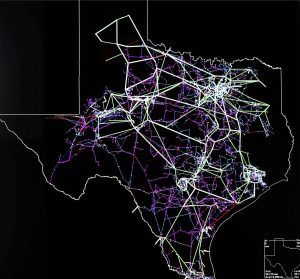
The ERCOT Board of Directors meeting On April 8, 2025, included key developments covering the dissolution of the Reliability and Markets (R&M) Committee, updates on commercial market initiatives such as real-time price corrections and residential demand response, progress on long-term grid resilience projects like the San Antonio South Reliability Project, and continued focus on grid weatherization in compliance with NOGRR245. Other topics included market design changes, credit policy updates, and the introduction of Real-Time Co-optimization (RTC), all aimed at ensuring a more resilient, efficient grid for Texas. Here are the key points from the meeting:
Key Highlights and Developments:
Structural Shift: Dissolution of the Reliability and Markets (R&M) Committee In a significant organizational shift, the ERCOT Board voted unanimously to dissolve the Reliability and Markets (R&M) Committee. This decision marks a strategic move towards enhancing Board-level engagement with key policy decisions related to operations, planning, and market dynamics. Going forward, these matters will be handled directly by the full Board, ensuring that critical policy issues receive higher-level attention and more streamlined decision-making.
Commercial Markets Updates: A Focus on Market Integrity and Resilience Several key updates in ERCOT’s commercial markets were discussed:
- Real-Time Market Price Corrections: The Board approved corrective actions for real-time market prices, addressing distortions caused by faulty resource telemetry readings between August 12 and September 11, 2024. These price anomalies, due to an energy management system defect, resulted in a market impact exceeding $3.3 million. ERCOT has implemented a refined correction methodology that minimizes unnecessary payments to market participants, without altering the protocols.
- Independent Market Monitor (IMM) Report: Jeff McDonald, Director of the IMM, underscored the urgent need for market design changes to ensure resource adequacy amidst anticipated load growth. He proposed enhancing price signals to incentivize both the retention of existing resources and the addition of new investments, particularly to support the growing renewable energy sector.
- Residential Demand Response Initiative: ERCOT unveiled a new initiative aimed at integrating residential demand response through smart devices like thermostats and water heaters. The program is expected to roll out by 2027, with the goal of enhancing grid stability by leveraging customer participation in energy management during peak demand periods.
- Credit Policy Changes: Following broad stakeholder input, ERCOT proposed changes to its credit policy to address overcollateralization during price spikes. The new policy is set to be codified under NPRR1277.
- Winter Event Pricing Review: The Board reviewed the pricing impacts stemming from the February winter storm, highlighting significant variances in both day-ahead and real-time congestion. This review served as a reminder of the importance of maintaining strong price signals to ensure system reliability during extreme weather events.
System Planning and Long-Term Grid Resilience: Strategic Infrastructure Projects ERCOT is making significant strides to improve long-term grid resilience and reduce reliance on certain reliability must-run (RMR) units. The Board provided an update on the San Antonio South Reliability Project, aimed at enhancing transmission capabilities and reducing dependence on older, less efficient grid resources. Notably, the timeline for this critical project has been accelerated, with completion dates now set for 2026 and 2027—several years earlier than initially projected.
By fast-tracking these upgrades, ERCOT hopes to mitigate the strain on existing infrastructure and improve overall system reliability in anticipation of future grid demands. This initiative, which involves extensive collaboration with Transmission Service Providers (TSPs) like CPS, AEP, and STEC, is crucial for maintaining grid stability as Texas continues to experience significant population growth and a shift toward renewable energy sources.
Grid Weatherization and Compliance: Strengthening Operational Readiness ERCOT has continued to prioritize grid weatherization as a critical element of system preparedness. The implementation of NOGRR245, which focuses on voltage ride-through capabilities for Inverter-Based Resources (IBRs), is a key step in ensuring that new and existing resources can operate effectively during adverse conditions. ERCOT is reviewing exemption requests and working with market participants to ensure all resources meet the required standards by the December 31 deadline.
In addition, ERCOT’s winter weatherization efforts, which were successfully completed in advance of the colder months, have shown promising results, with units prepared for any future severe weather events. These proactive measures reflect ERCOT’s ongoing commitment to strengthening grid reliability in the face of increasing volatility in weather patterns.
Enhancements to Market Design: Real-Time Co-optimization and Ancillary Services The Board received an update on Real-Time Co-optimization (RTC) and its expected impact on ERCOT’s market efficiency. As trial periods for RTC begin in May 2025, ERCOT is working closely with market participants to ensure full readiness. One of the key proposals is the introduction of a $15 floor for Ancillary Services (AS) demand curves to enhance market stability and reliability. The RTC is designed to better integrate energy and ancillary services, enabling ERCOT to optimize the dispatch of resources more effectively in real time.
Financial and Operational Oversight: Budget Approvals and Organizational Updates The Board also reviewed several important financial and operational updates, including the approval of the proposed budgets for 2026 and 2027. Total authorized spending for 2026 is set at $474 million, with a planned increase to $557 million for 2027, which includes a significant investment in a data center refresh project.
In a separate update, ERCOT’s Human Resources and Governance (HR&G) Committee reaffirmed the organization’s current policies and procedures, while the Finance and Audit Committee reviewed the status of retirement plans, health and welfare activities, and future objectives. These efforts are integral to ensuring ERCOT’s ongoing operational health as it continues to manage an increasingly complex and dynamic electricity grid.
Executive Session: Key Votes and Strategic Decisions In executive session, the ERCOT Board made key strategic decisions, including the selection of Baker Tilly as the independent financial auditor for 2025. This decision is part of ERCOT’s commitment to maintaining transparency and financial integrity as it manages the substantial resources required to oversee Texas’ electric grid.
Looking Ahead: ERCOT’s Vision for a Resilient Future The April 2025 ERCOT Board meeting underscored a commitment to strengthening Texas’ electric grid through careful market design, enhanced infrastructure, and forward-thinking policies. With growing electricity demand driven by population growth, economic expansion, and the rise of electrification, ERCOT’s focus on grid reliability is more critical than ever.
Through initiatives such as the acceleration of the San Antonio South Reliability Project, the implementation of real-time co-optimization, and strategic financial investments, ERCOT is positioning itself to meet future challenges head-on. Additionally, its ongoing efforts to improve market signals, bolster system operations, and prepare for evolving technologies demonstrate its readiness to ensure a stable, resilient grid for Texas’ future.
As ERCOT navigates these challenges, it remains steadfast in its mission to support the growth of renewable energy while maintaining the reliability and resilience of the state’s power grid. The decisions made at this meeting reflect a clear vision for the future—one in which grid stability, market efficiency, and operational readiness work in tandem to meet the needs of all Texans. For more on ERCOT’s objective of a reliable grid, read our blog ERCOT’s Path to a Resilient Future.
Ready to take your renewable energy projects to the next level? Speak with our experts at Zero-Emission Grid today and discover how our innovative solutions can streamline your grid siting process. Sign up now for a free demo and see firsthand how we can help you accelerate your project’s success.